
Where Utah's Old Mugshots May Be
Utah's old arrest photos are spread across record groups. The Utah State Archives keeps prison material and local jail books in separate collections. No single statewide page holds every photo. A record series is just a group of related files managed under one schedule. Prison registers, jail books, court files, and sheriff records all stand apart. Some prison material is digitized. Other series are described by number only. A county or city office may keep its own files. Another record may have already moved into permanent archival care.
Origin narrows the search fast. A state-prison register covers people admitted to the prison system, not every arrest in Utah. The Ogden jail books track one city's arrests and prisoners. Court files answer a different question: what case was filed and how it ended. A scan, an index entry, and a full file are not the same thing. Finding one source does not mean every image survived. Older items may be digitized, restricted, or neither.
Start with a series description and its stated period. Then check whether the exact book or image is digitized or restricted. Guessing from a person's age or a broad county name rarely works. The Archives' preservation notice for state-prison records explains how historical transfers into permanent care happened. It also notes that access can still be limited. The archive path works best from a likely agency and a known period. That habit saves hours of dead ends.
Utah State Archives Collections
The Archives' collection pages are the strongest starting point. Series records rank just behind them. Their date spans are not interchangeable, since one series may cover a single institution, one run of books, or a particular photo set.
| Collection or series | Where and period | Access path |
|---|---|---|
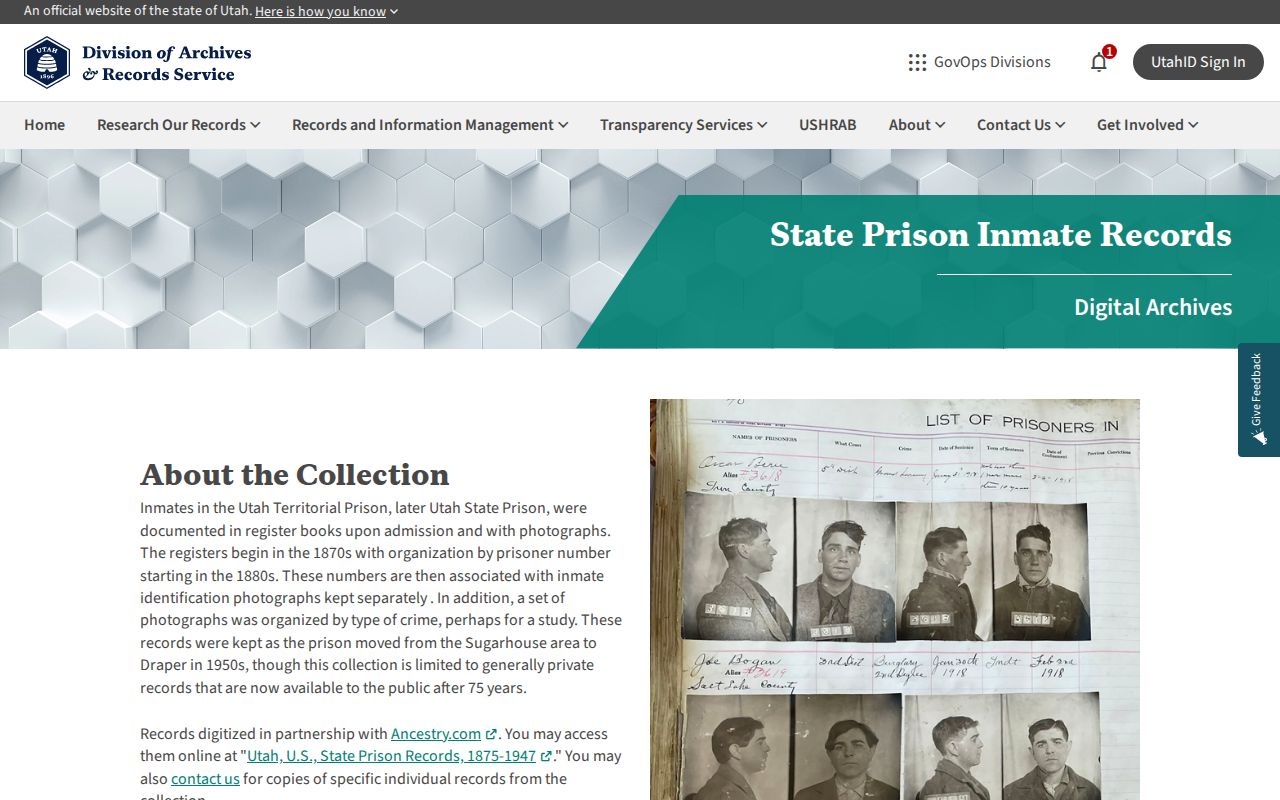
| Utah, U.S., State Prison Records | Utah State Archives digital collection, 1875-1947. Registers begin in the 1870s; photographs accompanied inmate information by 1889. | Search the prison inmate collection; some digitized access is through a partner service. |
| Series 10398, State Prison Inmate Photographs | 1940-1954. Mostly state-prison images, with a few Salt Lake Sheriff, Box Elder Sheriff, and Ogden Police Department photographs. | Use the series description and index; public or private status can depend on the item's age. |
| Series 10396, Identification Photographs | Approximately 1890-1925 and 1950-1968. | Check the Archives series entry for the relevant identification-photo records. |
| Series 80388, State Prison Commitment Registers | The Archives identifies this series as commitment registers; use its series entry for coverage details. | Review the series description before asking for a volume or page. |
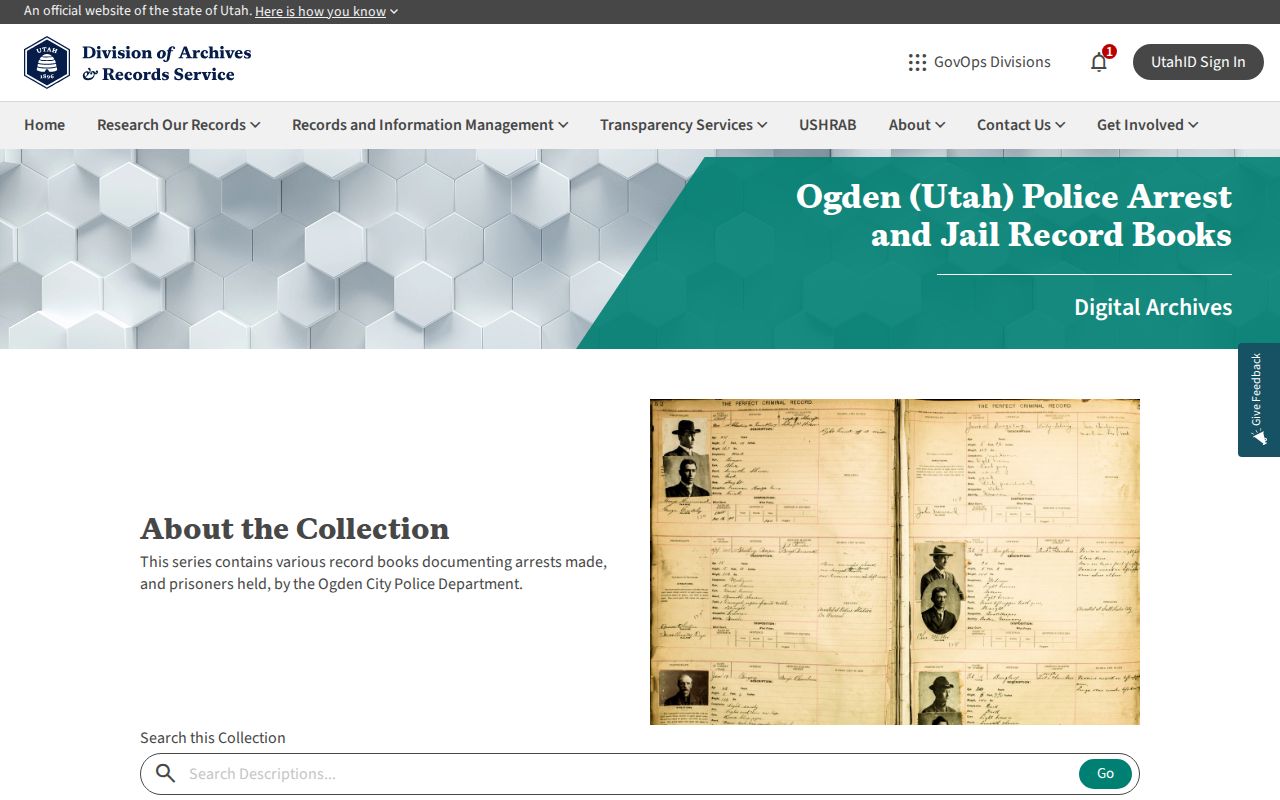
| Series 13300, Ogden Jail Books | Ogden City arrests and prisoners, 1902-1941. | Search the digital jail-book collection; privacy redactions apply to some records. |
The State Prison Inmate Records collection page describes registers, photographs, and digitized material. It is not a statewide arrest index.
Give staff the series number and date range when you write. A broad name search can miss a book entry.
Note: The date range on a series sets its scope; it does not promise that every year has the same records or photographs.
Ogden Jail Books, 1902-1941
Series 13300 is a municipal collection, not the state-prison registers by another name. The records come from the Ogden City Police Department. They run 1902 to 1941 and cover arrests and prisoners. An entry can hold a mug shot, a prisoner number, and a physical description. That helps when a name and rough year are known.
One caveat applies. The digital collection redacts minors in records less than 100 years old. A redaction marks an access rule. These are archival books, not a current booking roster. The Archives' Ogden Jail Books collection is the official digital entry point. Use it for history, not live searches.
Read the description first. A handwritten entry is rarely the whole story. The book can point to another file, but it does not replace that file.
Utah Retention Schedules Change
Retention is set by record series and the agency's approved schedule, not by one statewide countdown that fits every sheriff or police department. The Archives' general-schedule material describes arrest records as kept for a period after the person's last release and later destroyed. It also describes mug-shot records as potentially retained for 75 years and transferred to the Archives. That is a general reference, not a promise that every current local office follows the same schedule or has an image to send. Local agencies can have their own approved schedules, so the Archives' retention-schedule hub and schedule explanation should be checked against the agency that held a specific record.
GRAMA's long-term rule for access is separate from retention. A nonpublic record is generally presumed public 75 years after creation, or 100 years when the person was 21 or younger at creation, subject to exceptions. That rule does not require an agency to recreate a record already destroyed, and it does not override a current protected-image category or every other privacy limit.
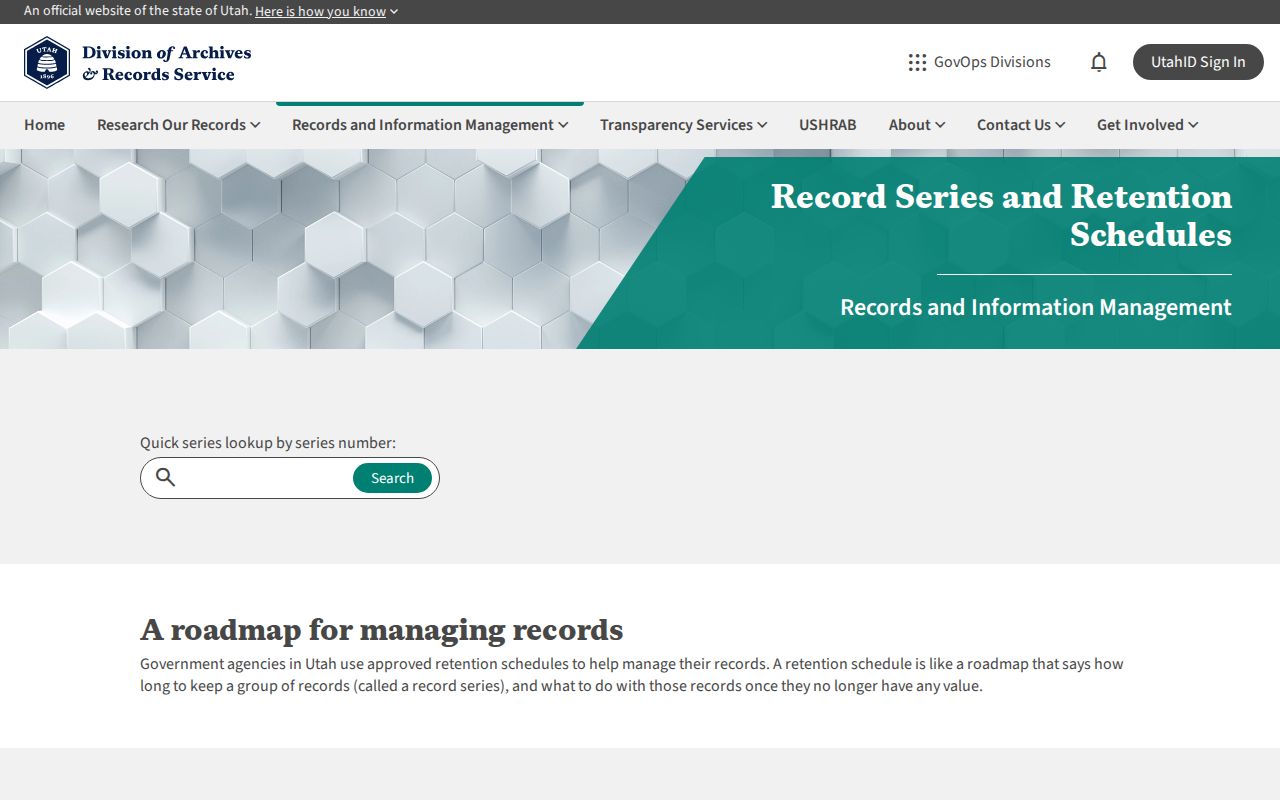
The Archives' schedule page explains that approved rules cover both how long a public record is kept and what happens at the end of that period. The schedule interface is an entry point for policy research, not a lookup for a named person's booking.
Ask the record-holding agency before assuming a photo should still exist. Confirm the current schedule with them.
Note: Retention rules apply to record series, so a booking entry and its image may not share the same schedule.
Requesting Old Utah Records
A strong Archives request pins down one existing item. Name the institution or collection first. Then narrow by person, date, series, and record type. Say plainly if you want an image, since a register entry and an identification photograph can live in separate series. Use this path rather than asking the Archives to build a new statewide search product.
- Search the Archives' digital collections and series inventories for the relevant prison, jail, police agency, date range, and record series.
- Write down the series number, box or item description, person's name, approximate date, and page or image identifier if one appears.
- Use the Archives research and contact path to ask the Reference Team whether the item is digitized, public, restricted, or available for reproduction.
- Ask for the current reproduction fee, delivery format, and turnaround before ordering. Public collection pages do not set one price or response time for every request.
- If the record is not held by the Archives, contact the responsible sheriff, police agency, court clerk, or Utah Department of Corrections custodian for the existing record.
Help staff tell your person apart from others who share the name. A county, town, institution, year range, and record type can pin down the right volume. Some holdings are restricted or undigitized. Ask what access or reproduction options apply. Don't assume a scan is public.
Note: The Archives asks requesters to confirm reproduction terms with staff because fees and service times depend on the item.
What Utah Archives Can Preserve
Archival survival never equals a full life history. A prison register may carry a name, a number, a sentence, a discharge, or another detail. The photo that goes with it often sat in a separate series. Indexes mislead in another way. A digitized entry can describe a page that never made it online. Access limits can still block an item. So treat each description as a pointer to the record. That is not proof everything related was kept. Older material carries another trap. Period terms and labels often fail to match today's legal categories, and a jail-book entry shows only what an agency wrote at the time. When a disposition matters, go to the court file for that case rather than reading one into a caption.
Name every source in historical research. That means the prison register, the photo series, the municipal jail book, or the court record. Keep the source date with any note. Note the source's limits too, so an old record is never read as something it is not.
Route Recent and Court Records
For a recent booking, start with the current county roster instead. The County Directory links to each local government source. The statewide Utah record overview explains how county roster windows and feed types differ. Don't assume a fresh entry has already reached the Archives. Case outcomes follow a separate path. Per Utah Courts' court-records page, older court records may end up deposited with the State Archives. Public case summaries are searched through the court system. A court repository item, a prison file, and a local booking record serve different purposes. Each answers a different stretch of the same timeline.
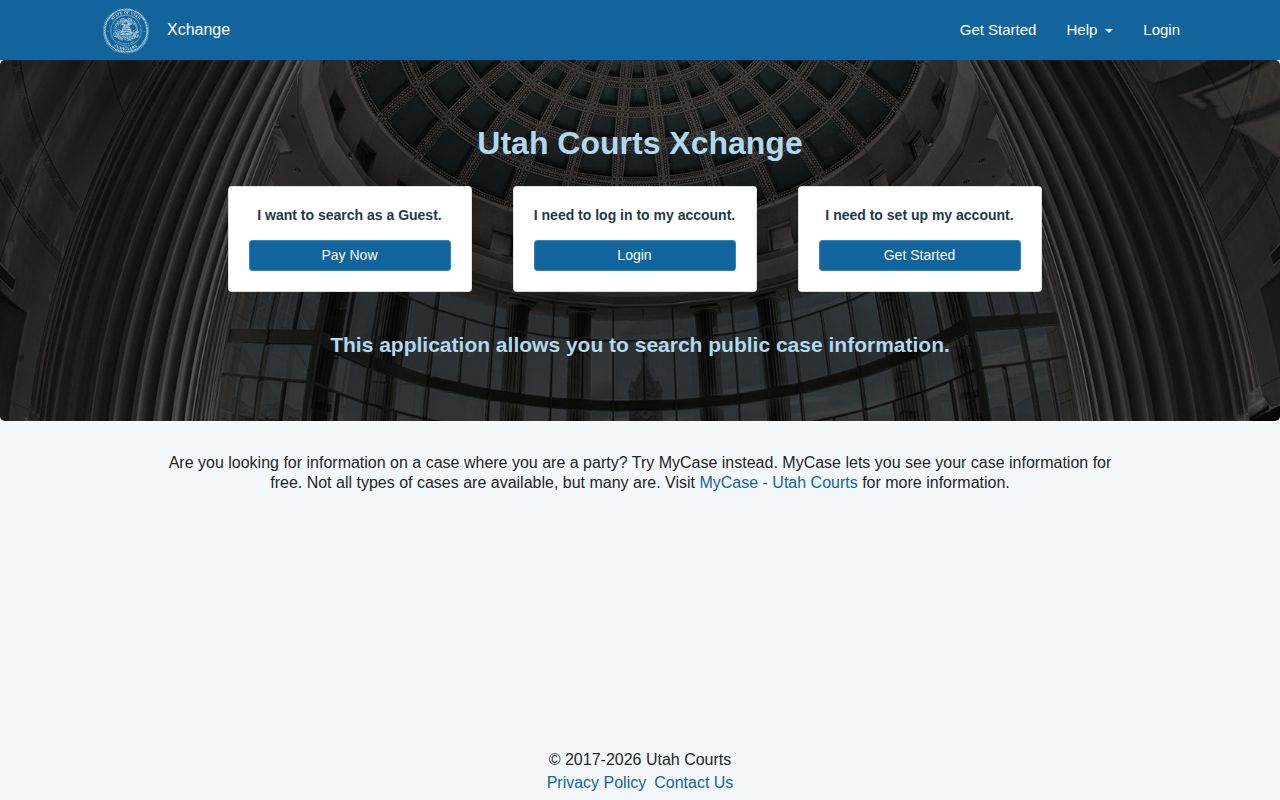
One more distinction matters here. The Utah Xchange public case search is a court portal, not an Archives collection. It serves as the current entry point for public case summaries.
An older court file may fail to appear in the public summary service. Ask the court directly. The record may have been transferred. The Archives may also describe it differently. An empty online result does not mean no historical file exists.
State-prison records follow a different route. They run through the relevant Utah State Archives collection or the Utah Department of Corrections record process. County intake questions go back to the sheriff or jail that made the booking. Matching the request to the custodian prevents obvious mix-ups. It stops errors like treating a prison photo as a county mugshot or a court docket as a booking log.