
Utah Mugshot Access Has Limits
Utah has no single yes-or-no answer here. The Government Records Access and Management Act, known as GRAMA, starts from the idea that government records belong to the public. But a more specific law can step in. And for booking photos, Utah has one. Keep three things separate: the roster entry, the case summary, and the image taken at jail intake. Each is its own record. Each follows its own access rule.
That split explains a common frustration. A Utah busted mugshots search may return names and charges with no image attached. The blank spot does not mean the booking never happened. Before treating any single result as the whole story, ask two things: which agency created the record, and what type of record is it?
| Record or question | What Utah law says |
|---|---|
| Roster and booking details | GRAMA's public-record presumption applies unless a specific classification, privacy rule, or other law limits access. |
| Booking photograph | A photo taken during jail booking is protected under § 63G-2-305(80), subject to the listed statutory exceptions. |
| One search with no result | It may reflect a closed record, a case not yet filed, a different record holder, or a search mismatch. It does not settle what happened. |
County booking tools vary across Utah. The Utah County Sheriff's inmate search shows one county's approach, and its posting notice and fields describe local practice rather than any statewide photo rule.
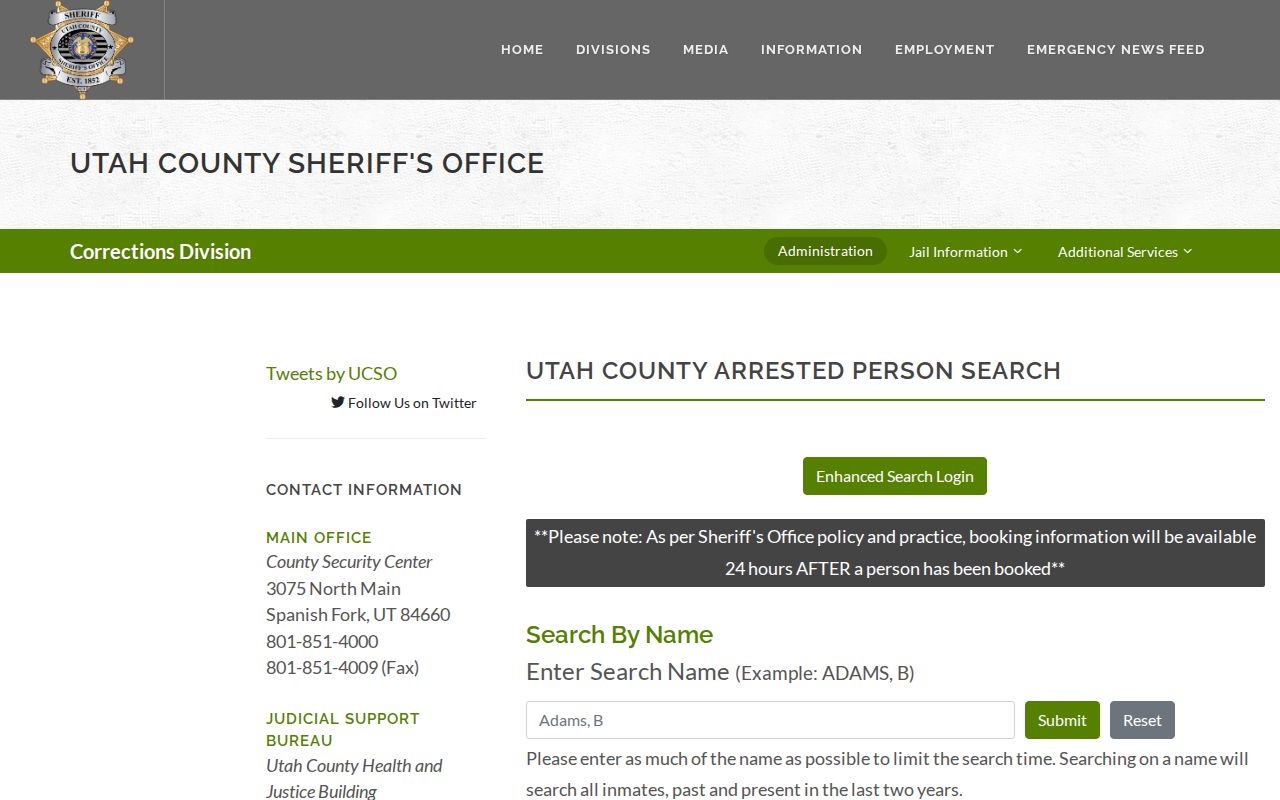
The roster covers its own records. That is one layer only. A case question may still need a court search or a written request to the custodian who holds the file.
What Utah Code § 17-72-802 Controls
The operative statute today is Utah Code § 17-72-802, which took effect under that number on November 6, 2025. Older agency pages still cite § 17-22-30. That was the earlier citation for the same policy. For current law, the new text leads. It defines a booking photograph as an image made to identify a person booked into a county jail. A publish-for-pay site is one that demands money or other consideration to remove the photo. A sheriff cannot hand over a copy knowing it will land there. The same bar covers images protected under § 63G-2-305(80). Anyone requesting a copy must sign a statement promising it will not be used on such a site.
Lying on that statement carries criminal exposure. A custodian may insist on the certification first. Alleged victims get one narrow window. With prosecuting-agency consent, and under Utah Evidence Rule 617, a victim may view a photo. Copying, keeping, or sharing it is off limits. If death or incapacity blocks the victim, limited access passes to an immediate family member, guardian, or conservator.
Think of that as a supervised viewing, not a download right. The removal deadlines bind only publishers meeting the statute's definition. The statute sets two tracks:
| Request type | Time and fee rule | What proof matters |
|---|---|---|
| Ordinary removal request | Removal or destruction within 30 days; a fee may not exceed $50. | Identify the image and show that the site is covered by the statute. |
| Favorable case outcome | Removal or destruction within seven days, with no fee. | Provide evidence of acquittal, nonprosecution, expungement, vacation, or pardon. |
A publisher that blows the deadline pays for it. The statute adds costs and attorney fees on top. The penalty runs $50 per day once the ordinary 30-day request window closes. Wait seven days after a favorable outcome and it climbs to $100 daily. Refusing to remove a booking photo unless a fee is paid, even after proof of a qualifying outcome, counts as theft by extortion under the same provision. None of this turns an ordinary news archive or independent index into a covered publish-for-pay site.
Utah GRAMA Photo Requests
GRAMA covers records that already exist. It does not force an agency to write a new report. Nor must it chase an open-ended question for you. So a smart request names the agency and the person. Add a booking or case number if you have one. Include the date range and the exact record you want. Staff time and copies may carry a reasonable actual-cost charge under § 63G-2-203. Inspection also depends on reasonable procedures and how the record is classified.
Booking photos get special treatment. The specific protected-record rule overrides the general public presumption. Section 63G-2-305(80) lists the openings. A person convicted of the offense tied to the incarceration qualifies. So does a release for law-enforcement purposes. That covers finding a fugitive or meeting an imminent threat. A judge can order release for a legitimate law-enforcement interest. A viewing allowed under § 17-72-802 counts too. But conviction is only an exception in the classification statute. It never promises that a county roster will post the image afterward.
Ask for the existing image and nothing more. Let the custodian weigh the certification, privacy concerns, and any law-enforcement or victim-safety basis. Other limits reach victims, witnesses, informants, medical details, protected identities, and active investigations. Never assume an image is public. A name or charge may show up somewhere online on its own. The agency may deny or redact the record. GRAMA still gives you a review and appeal path to challenge the stated reason. Juvenile delinquency records run on a separate track. Utah Courts describes juvenile expungement as sealing a resolved case. Title 80, Chapter 6 tells agencies to destroy photos in the circumstances the law spells out. Fingerprints and some supervision or institutional records follow their own rules. Check the current category before promising destruction.
- Protected record
- A record Utah law withholds from ordinary public access, even when other records about the same event are available.
- Disposition
- The court's outcome in a case, such as dismissal, acquittal, conviction, or another final result.
- Existing record
- A record the agency already keeps. GRAMA does not make the agency create a new list or report.
Note: Ask for a record held by the named agency, since one office may not keep another office's booking image, court file, or release entry.
Utah Law Separates Photo Access and Removal
Utah's tighter rules trace to H.B. 228 in 2021. That law put booking images inside GRAMA's protected-record structure and limited what sheriffs could disclose, subject to exceptions. The gap shows up on county pages. Some now explain why photos vanished from public roster views. A statewide public-record law can sit comfortably beside rosters that list names and custody fields while leaving images out.
Amendments kept coming. They adjusted the statutory structure and exceptions, including victim access and the favorable-outcome removal process. The 2025 recodification moved the current county-sheriff text to § 17-72-802. So when an older notice cites § 17-22-30, check the current Code before trusting its wording or deadlines.
Case law offers no direct answer here. No published Utah appellate or federal decision construes the current removal remedy or holds that every booking-image publication falls under it. Blackmore v. Carlson dealt with arrest and booking-photo evidence in litigation. It is not a ruling on the pay-to-remove law. Keep that distinction firm so the citation is not overstated.
Why Utah Xchange May Show No Case
The Utah Xchange portal is a public case-summary service, not a county booking log. It has real boundaries. Utah Courts' service information lists what the public view leaves out: sealed and expunged cases, juvenile delinquency cases, child-welfare matters, and termination-of-parental-rights cases. So a blank result can mean several things. It may reflect a legal access limit, a case not yet filed, a spelling mismatch, or a record outside the service.
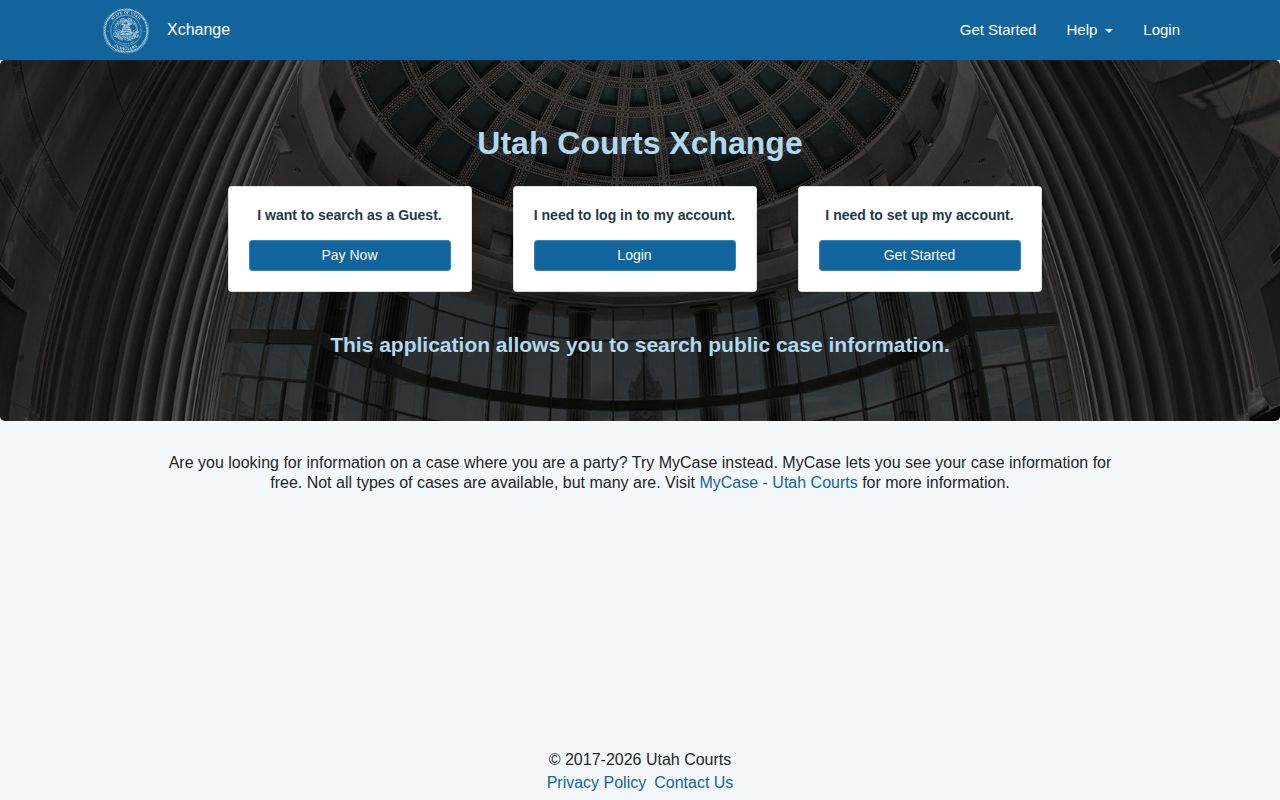
Utah Courts juvenile-court information walks through that separate system. Juvenile delinquency cases sit outside public Xchange, so a blank result can simply mark the portal's edge. An adult-facing search can't tell you a sealed youth record exists, nor that an arrest never happened. Match the record type to the right system.
Note: Xchange's limits describe the public service, not every court or agency record that may exist under a separate access rule.
Other Utah Arrest Records to Check
A photo is only one piece of an arrest record. The county booking entry may show intake or custody details. The court file holds a filed charge and its outcome. Start local with the County Directory to reach the right office. The statewide Utah booking overview explains how county roster windows differ. Field setups also vary from place to place. For a person-specific check, follow the trail from the agency to the court. Do not expect one portal to hold every layer:
- Choose the county or arresting agency that would hold the booking record. Search its official roster if one is available, and note the date range the roster covers.
- Ask the records custodian for an existing booking or arrest record. Give a name, known booking or case number, date range, and the exact fields or image requested.
- Search Xchange for a filed public case and read the disposition field or docket entries. If the case is sealed, expunged, juvenile, or not yet filed, a public result may not appear.
- If the person was later sentenced to state custody, use the Utah Department of Corrections offender search for the supervision record. A state-prison record does not replace a county booking record.
Keep your sources labeled and separate in notes. A jail roster shows current or recent custody. A court file shows the case outcome. Neither alone can vouch for an old third-party caption's accuracy.
Utah Expungement Does Not Erase the Web
Expungement in Utah means sealing. Utah Courts explains that the order closes government records from public view unless a judge grants access. Starting January 1, 2026, qualifying automatic expungements skip the paperwork entirely. No petition is needed. Court review runs as long as 120 days. Monthly checks cover eligible cases, and time is set aside for a prosecutor to object. Statutory rules and the case outcome still control who qualifies. So a "clean slate" headline oversells things. The Utah Courts expungement guide lays out the waiting periods and exclusions that actually apply. It flags one more catch: outside entities are not always legally required to delete their own copies.
That gap is the whole problem. Government custodians must obey the order. Xchange drops a public case entry once the sealed status processes. But a news archive, search engine, or third-party index sits on a separate layer of records. Nothing in the order forces those publishers to scrub anything.
Timing varies by offense and result. The automatic clean-slate explanation sets seven years for a Class A drug-possession conviction. A Class B misdemeanor gets six. Petition cases carry added conditions. There must be no disqualifying pending case and no current incarceration or supervision. Fines, fees, and restitution must all be paid. A certificate of eligibility from the Utah Bureau of Criminal Identification can take months to arrive. It expires after 180 days. Rely on the current court and BCI instructions for your own case. A court order, not an aggregator's status label, is what carries weight.
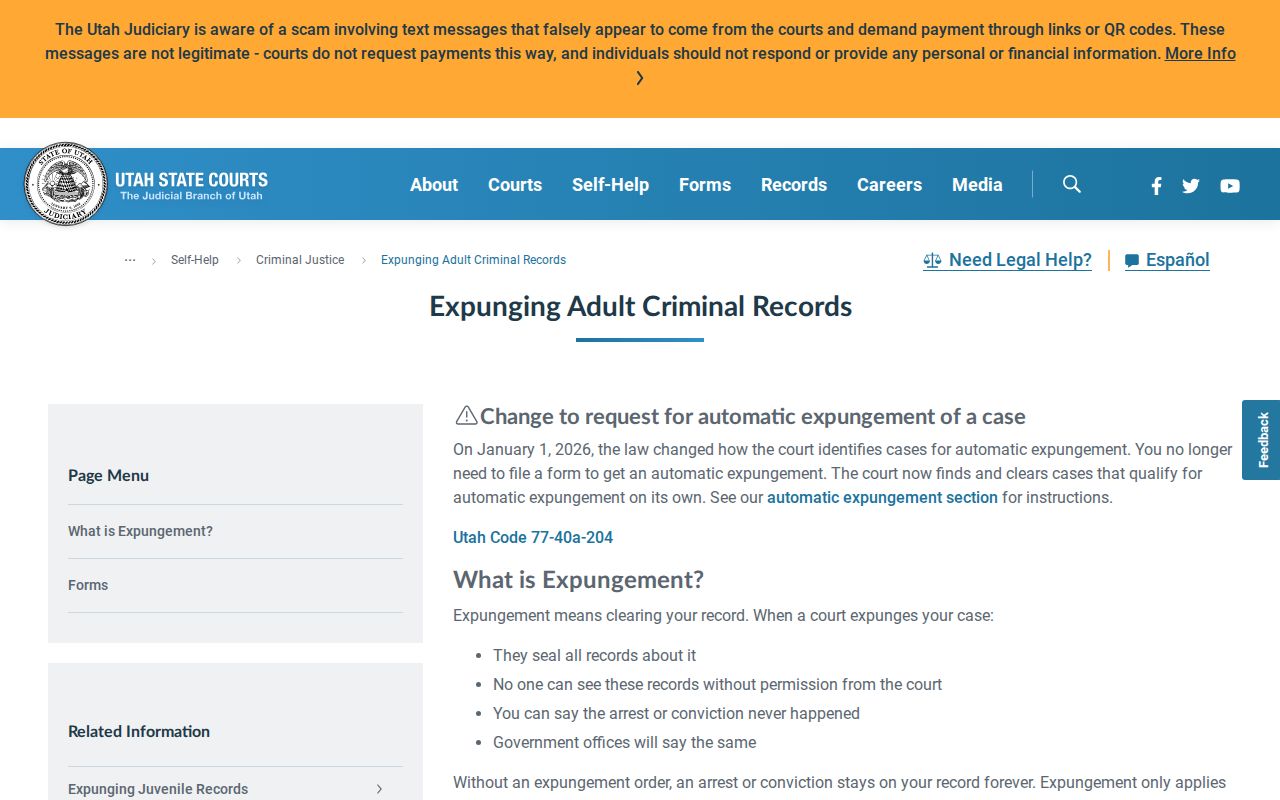
One statute narrows the gap slightly. Section 17-72-802 compels a covered publish-for-pay site to pull the photo within seven days of receiving proof. The takedown comes at no charge. That applies only to qualifying favorable outcomes. It is not a promise that the internet gets wiped clean. Keep the order or official outcome notice and the page address. Save your request date too, so the right publisher and record can be pinned down.
Note: A sealed government record and an old copy on an independent website are different records, handled by different custodians.
Utah Listing Corrections and Free Opt-Outs
Begin at the source. The government record and the court disposition come first. When a third-party index repeats an outdated or mistaken entry, work through that publisher's own correction process and submit only the proof it requests. These services are secondary indexes, not Utah agencies. Fixing one listing leaves the sheriff's file and the court record untouched.
| Third-party site | Published correction path | Important limit |
|---|---|---|
| Busted Newspaper | Its form asks for the source URL, contact details, reason, and supporting proof. No fee is stated on the reviewed form. | No standard processing time is stated; a form is not a guarantee of removal. |
| RecentlyBooked | Its policy says correction or removal requests are free and lists reasons such as an incorrect record, sealing, expungement, juvenile status, or dismissal. | The listing remains an unofficial copy and its removal does not amend a government record. |
| Mugshots.com | Its record-maintenance page describes a no-cost process for documented cases such as sealing, expungement, identity error, or a favorable outcome. | Follow current proof rules; the policy does not clear other websites or search results. |
| Arrests.org Utah pages | A record-specific correction or removal form is available from an individual listing. | A fee-free guarantee for every Utah request was not verified. |
| Mugshots.zone | The site says it will address sealed or expunged material after notice. | No Utah-specific free workflow or standard timing was verified. |
The opt-out terms differ, and those differences matter. One service states its process is free. Another form names no price at all. Others publish no confirmed no-fee route for every request type. Read the live instructions before submitting anything, and save a copy of the proof you send.
Watch for the money pitch. Any outfit promising to erase every copy across government records, news stories, search results, and independent sites is waving a red flag. Utah's statute covers a defined kind of publisher with its own conditions. No outside service can make an ineligible case expungeable. Nor can it force every separate record holder to obey one rule.