
Where Utah's Notable Arrest Records Live
A famous name changes nothing about where the paperwork sits. Utah records scatter across several offices. Courts keep the charges and any later rulings, and an agency archive may release selected files of its own. Historical prison records sit with the State Archives. Each office answers a different question. Two agencies rarely hold the same photo. Some old files open to the public, while others stay sealed by rule. No booking photograph appears on this page. An image from news or social media is not the official booking photo unless a source ties it to the county record.
Utah Notable Arrests and Case Files
This index reaches across county, state, and federal cases from several eras. Each entry names its agency and record source. For a court outcome, the docket or judgment itself is the record that counts.
| Case and year | Agency or location | Reported disposition | Where to start |
|---|---|---|---|
| Ruby Franke and Jodi Hildebrandt, 2023 | Washington County Sheriff's Office | Both pleaded guilty to four counts and were sentenced in February 2024. | Washington County Attorney case archive and Xchange |
| Kouri Richins, 2023 | Summit County investigation and prosecution | A jury convicted her in March 2026; she received a life sentence in May 2026. | Summit County 3rd District Court file, Xchange, and the KPCW sentencing report |
| Mark Hofmann, 1985 | Salt Lake City Police | He pleaded guilty in 1987 to two second-degree murders and fraud-related offenses, receiving a natural-life sentence. | Utah court records and State Archives prison series 80388 and 10396 |
| Ted Bundy, 1975 | Utah Highway Patrol | He was convicted in Utah in 1976 of aggravated kidnapping and received up to 15 years. | Utah court and archive records; FBI history |
| Brian David Mitchell, 2003 | Sandy-area law enforcement and federal investigators | The FBI reported a life sentence in federal court in 2011. | FBI Salt Lake City release and the U.S. District Court for Utah file |
| Ronald Lafferty, 1984 | Utah law enforcement | Convictions and capital-sentence history appear in court opinions; he died in UDC custody in 2019. | Utah Supreme Court opinion and UDC records |
| Gary Gilmore, 1976 | Utah law enforcement in Provo and Orem | He was convicted, sentenced to death, and executed in Utah on January 17, 1977. | Utah State Archives collection and court records |
The table is a route into records, not a ranking. Public attention never substitutes for knowing the difference between an arrest and a sentence. Charges, pleas, verdicts, and appeals are separate steps. Archive indexes and press releases link onward to judgments. They also reach original agency material when those exist.
Note: A news account can help locate a case file, but the court's own docket and judgment set the disposition.
Utah's Franke Case Records
Washington County deputies made the 2023 arrest in the Ruby Franke and Jodi Hildebrandt case. The County Attorney's archive documents the aggravated-child-abuse prosecution. Both women pleaded guilty to four counts. A February 2024 hearing brought four consecutive terms of one to fifteen years, under Utah's sentencing structure.
That archive also releases official case material, including a redacted booking report. The charging and disposition papers sit in the Washington County 5th District Court file. Xchange helps pull the public case summary. The booking record and any releasable image remain county property. A released PDF is not the full booking file.
Follow the paper, not the headlines. The county attorney's archive posts its own case documents. The court docket settles plea and sentence. One photograph can travel far beyond its file. When the intake record itself is the question, the sheriff's records custodian decides what exists and what can be released. A photo inside a redacted packet is not a license to republish it alone.
Utah's Richins Court Record
Kouri Richins was arrested in 2023, after Summit County investigators examined her husband's death. The case grew into a public-records fight and sprawling court litigation. A jury convicted her in March 2026. The life sentence came in May 2026. The Summit County 3rd District Court docket and judgment remain the controlling record.
The case table links a KPCW sentencing report, while Utah Courts and Xchange carry the official history and judgment. The Summit County Sheriff's Office holds the booking record or photo, if release rules allow it. A screenshot of a records request settles nothing.
One more document floats around this case. The State Archives Government Records Office decision 2025-120 covers a related records dispute. Keep three things separate here: the public-records decision, the agency booking file, and the court's judgment. The court decides the outcome. The agency decides its own release.
Utah's Historic Arrest Archives
Hunting an old Utah mugshot often ends in an archive rather than a live roster. Mark Hofmann is the classic example. Salt Lake City police arrested him in 1985. The arrest came amid the bombings and the probe into forged historical documents. He pleaded guilty in January 1987. The pleas covered two second-degree murders plus fraud offenses. A natural-life sentence followed. The Washington Post sentencing account covered the outcome in court. For the plea and judgment themselves, the court record governs. State Archives Series 80388 and the identification-photo Series 10396 are possible paths to prison records.
Ted Bundy's Utah arrest came out of a Highway Patrol traffic stop in August 1975. An aggravated kidnapping conviction followed in 1976. Up to fifteen years was the term. The FBI historical account in the case table tells that story. Court records supply the legal outcome. Archive descriptions may point to prison or identification records. A copied photo proves nothing about its Utah booking origin. Brian David Mitchell was arrested with Wanda Barzee after Elizabeth Smart was located in 2003. His case went federal. The FBI Salt Lake City release in the table reports the 2011 life sentence. The U.S. District Court for Utah and federal repositories hold the file. The federal prison locator is no photo source.
Ronald Lafferty's 1984 case produced convictions. It also left a long capital-sentence history in Utah Supreme Court opinions. The Utah Department of Corrections (UDC) reported his death in custody in 2019. Gary Gilmore was arrested in 1976 for the Provo and Orem murders. Conviction and a death sentence came fast. Utah executed him on January 17, 1977. The State Archives describes a Gilmore scrapbook collection. The Library of Congress links the related Supreme Court litigation. Prison intake and identification records may sit in the Archives' series too.
Note: These cases use different record holders, so start with the court judgment or agency source and confirm an archive entry before using an image.
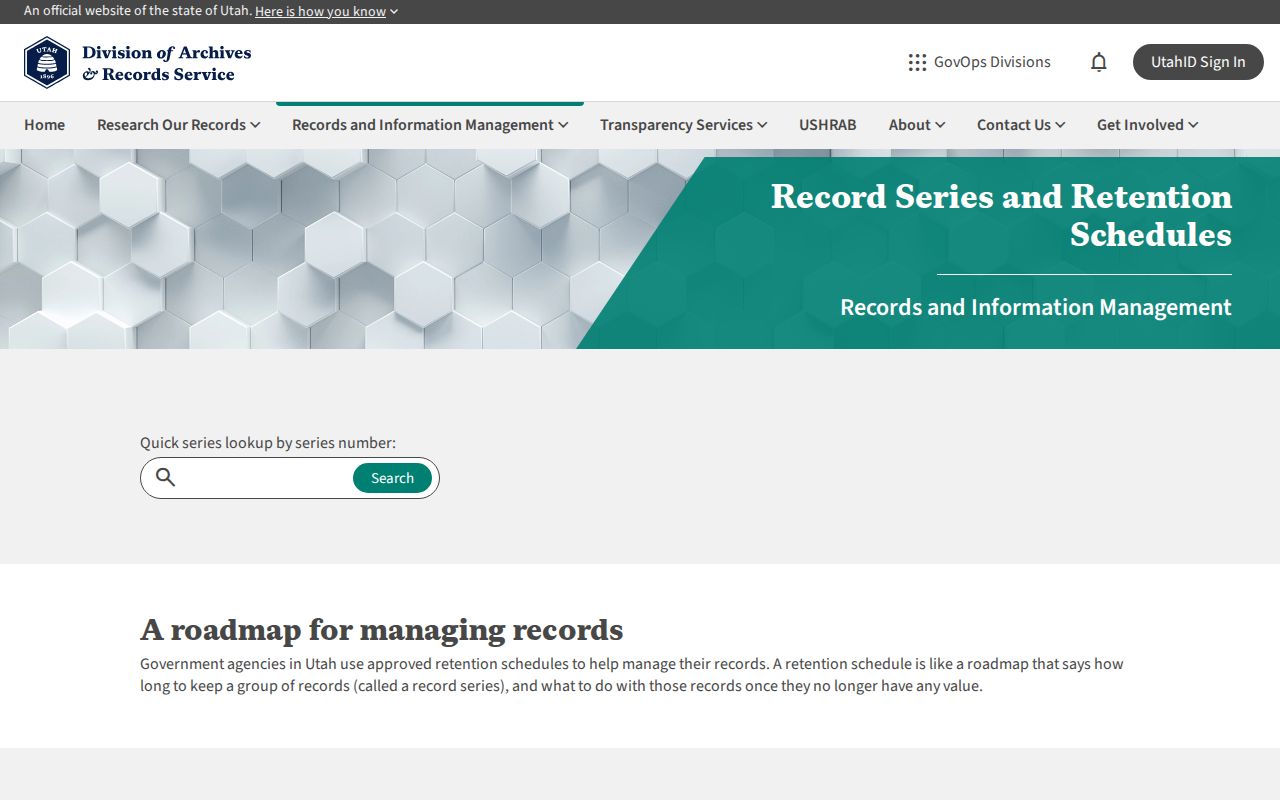
Utah Archive Series and Retention
Utah's prison paper trail runs deep. The State Archives' inmate collection starts with registers from the 1870s. By 1889, each entry carried a photograph. The digitized set is catalogued as Utah, U.S., State Prison Records, 1875 to 1947. An archive series is simply a group of records filed under one number. Some access runs through a partner service. An index or scan does not open every page. The State Archives prison-record collection page links series descriptions for registers and identification photographs.
Series 10398 holds state-prison inmate photographs from 1940 to 1954, with a few from the Salt Lake Sheriff, Box Elder Sheriff, and Ogden Police. Series 10396 covers identification photographs from about 1890 to 1925 and 1950 to 1968. Series 80388 is the commitment register. These are history, not live arrest lookups. A series description may list a charge or a physical detail. It cannot certify a photo as the original county booking image in a famous case.
Ogden kept its own jail books, Series 13300, covering arrests and prisoners from 1902 to 1941. The archive collection page describes prisoner numbers, mugshots, physical descriptions, and related jail entries. Records under 100 years old get privacy redactions for minors. Retention schedules control an agency's choices. Keep it, destroy it, or transfer it. The general schedule holds arrest records for a set period after last release, then destroys them. Mugshot records can last 75 years and then transfer. Local agencies may hold their own schedules. Schedules change. Check the current Utah State Archives retention-schedule hub and ask the agency which rule applies. A historical image may never have been transferred. A current online photo may be a newspaper copy rather than the archival original. Ask for the series and its source.
For an archival request, use this path:
- Search the Archives' digital collections and series inventories for the agency, jail or prison, date range, and record type.
- Write down the series number, box or item label, person's name, approximate date, and any page or image identifier shown.
- Contact the Archives' Reference Team to ask whether the material is digitized, public, restricted, or available for reproduction.
- Ask for the current reproduction cost, delivery format, and turnaround. The collection pages do not set one price or service time for every request.
- If the item is not at the Archives, contact the sheriff, police department, court clerk, or UDC records custodian that created it.
Find Any Utah Arrest Record
Which record you need depends on the agency that made it. A roster shows current county custody. A case search shows filed charges and an outcome. An archive may hold a paper register or an old photograph. Match the source to the event. Treat no single search result as a full history.
- For a recent county arrest, identify the county that booked the person and start with its official jail or sheriff source. The Utah statewide arrest-record hub describes the county roster and feed landscape.
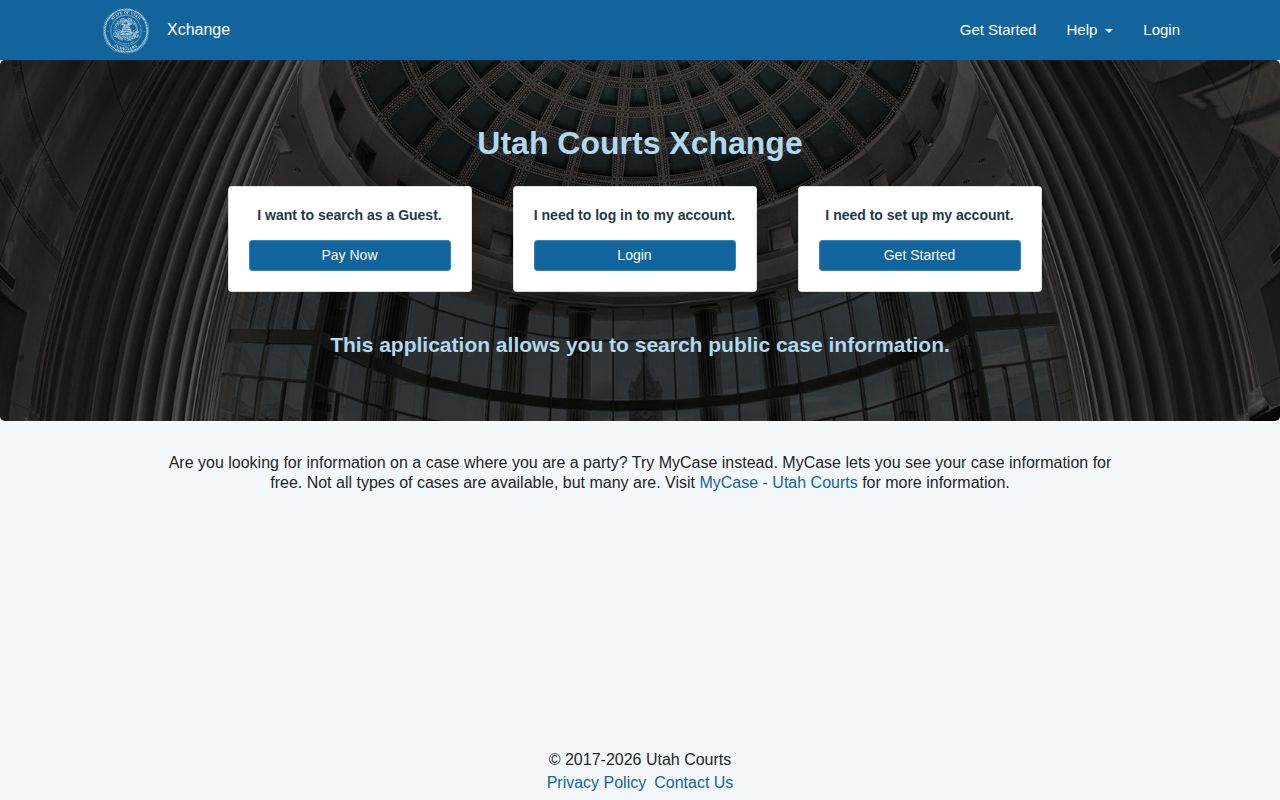
- For a filed Utah court case, use Xchange. Search the public case summary using the details available, then read the docket event or judgment. A new booking may not yet have a case number.
- For an older state-prison or jail record, search the Utah State Archives digital collections and series descriptions. The Utah old-mugshot archive route explains how to identify a collection and request help.
- For a federal prosecution, look for the U.S. District Court for Utah case and the relevant agency release. Do not use the BOP locator as a source for a federal booking photo.
- If the needed record is not online, ask the agency or court clerk that holds it. State the person's name, case or booking number if known, approximate date, and the exact record requested. Ask the custodian whether it exists and whether access is restricted.
Xchange, per Utah Courts, generally covers district and justice court matters within its stated scope. Public documents entered since July 1, 2010 may be available under court rules. The portal leaves out sealed matters, expunged records, and juvenile delinquency files. Other protected case types are excluded too. A blank result can mean many things. The cause could be no case filed, or a name typed differently. It could be a matter outside public access, or a record the portal simply lacks. It does not prove no arrest occurred. The Xchange start page explains the public case-search entry point. Access options appear there too.
Note: A new booking may not have a filed case yet, and a court summary does not establish that a booking image is public.
Utah Arrest Photos Are Not Verdicts
A booking photo records one thing: an identification event at the jail. It captures a moment, not an outcome. Whether charges were filed and how a person pleaded live elsewhere. What a jury decided lives there too. That answer sits in the court record. A disposition is simply the court's recorded result for a charge or case. So treat the photo as a starting point, never the last word. Even after a conviction is entered, the image still needs context. It must explain when it was made, and why.
Utah's public case systems have limits. Sealed, expunged, juvenile, and not-yet-filed matters may not appear at all. The State Archives can also hold records. Its rules differ from a current county roster. A blank case search or a copied news photograph settles nothing. Check the source, date, case number, and disposition together. Skip any claim the primary record cannot support.