
Utah Busted Mugshots and Booking
Booking begins the moment a sheriff takes someone into custody and the jail logs the person in. A mugshot is simply the identification photo made at that point. Utah law now treats booking images as protected records, so an official roster can list a name and custody status while withholding the face. Every county runs its own system. No single state roster gathers all county bookings.
Where you look next depends on the stage of the case. A live roster covers people currently held. A short booking report tracks recent intake. After release, the roster drops the name, but the county can still hold the booking record. The filed case and its outcome live with Utah Courts. Sentences and supervision show up in the Utah Department of Corrections, or UDC. Each source answers a different question. Treat them as separate systems, not one shared database.
A booking entry marks an arrest, nothing more. The disposition lives in the court record, where charges may shift, drop, or fail at trial.
What Utah Booking Records Show
Utah counties share no standard booking form. Carbon County offers a searchable table. It shows name, booking number, arrival, and holds. Other county pages list different fields or only a current-custody name search. Ask the county that made or holds the record rather than assuming every field appears online.
- Utah County booking detail can show arrest and booking dates, booking number, release date when applicable, arresting agency, and status.
- Carbon County's searchable table lists name, booking number, arrival, and holds; it does not define a statewide field set.
- UDC public information can include offender number, legal status, housing location, offenses, sentence length, hearing date, parole or expiration information, and sentencing details.
- A booking photograph is protected under GRAMA § 63G-2-305(80), subject to specific exceptions. Do not expect a photo on a roster.
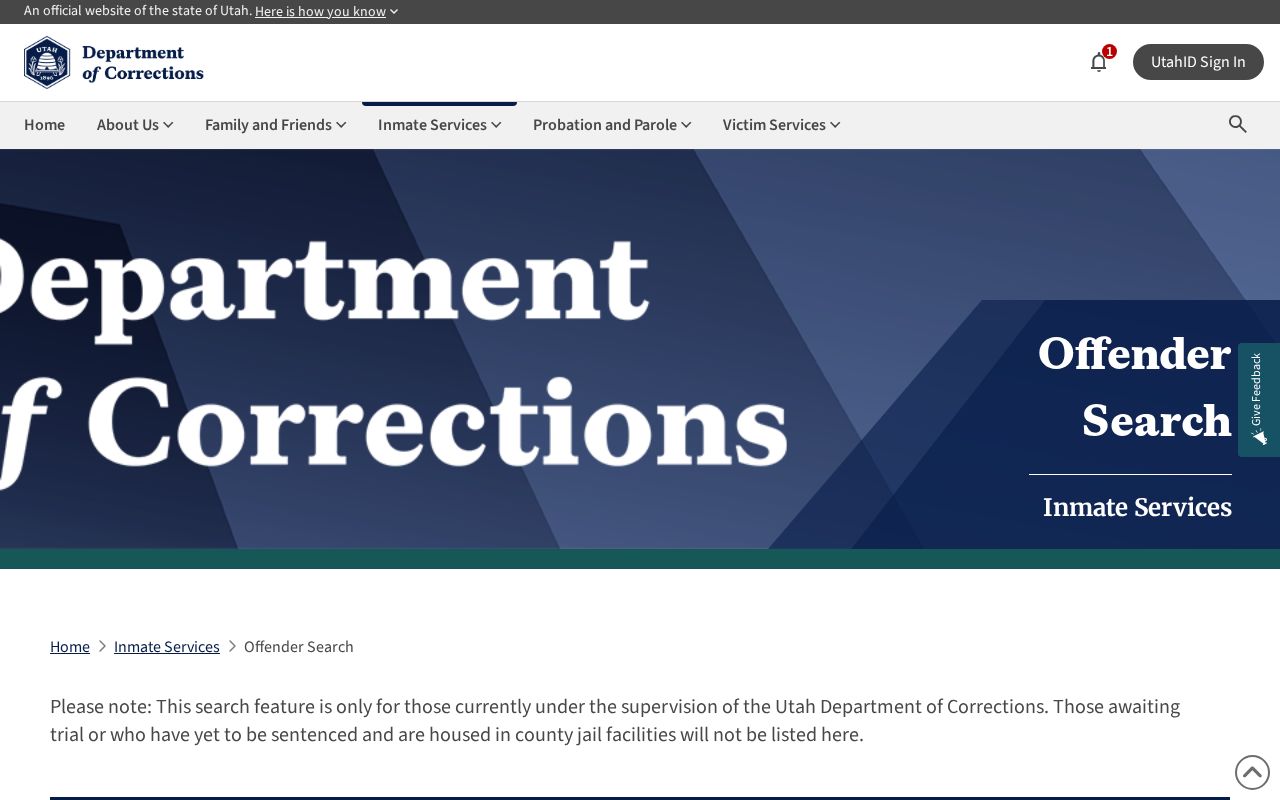
A UDC profile is not a county booking sheet. The photo category carries the label "Prison Photo/Mug Shot." The current locator promises no photo for every person listed. A profile can even cover someone serving a state sentence inside a county jail. Check the status and date before trusting a match.
- Booking
- The intake process that creates a jail record after arrest.
- Arraignment
- A court hearing where a filed charge is addressed and a plea may be entered.
- Bond
- Money or another court-approved condition that can allow release while a case is pending.
- Disposition
- The court's recorded result for a case or charge.
- Expungement
- A legal process that seals eligible government records under the court's order.
Utah Arrest Records and Photo Law
GRAMA, Utah's records law, presumes records are public. Access still turns on classification. Other laws can bar release too. Utah Code § 63G-2-201 holds that balance. An agency must identify an existing record from a reasonably specific request. It need not create a new report or merge scattered data. Copies and staff work can carry a reasonable actual-cost charge under § 63G-2-203, with the custodian setting the amount.
Section 63G-2-305(80) shields jail booking images unless an exception fits. A conviction tied to the incarceration is one. Others cover certain law-enforcement releases, a judge's order for a legitimate law-enforcement interest, or a viewing allowed by statute. Even so, a county need not put a photo on its ordinary roster after a conviction. Image requests get separate review from name requests.
The sheriff rule lives in Utah Code § 17-72-802. A 2025 recodification put it there. Older agency pages may cite § 17-22-30. The law bars a sheriff from handing a booking photo to a publish-for-pay website when its use there is known. Every requester must sign a statement that the image will not appear on such a site. That rule covers one business model, not a general right to every image.
H.B. 228 moved booking photos into GRAMA's protected-record structure in 2021. S.B. 43 followed in 2022. H.B. 376 came in 2024. The later bills touched victim access and removal after a favorable outcome. The current Code controls. So do official court orders. The full statute and the publisher-removal process have a separate statewide page.
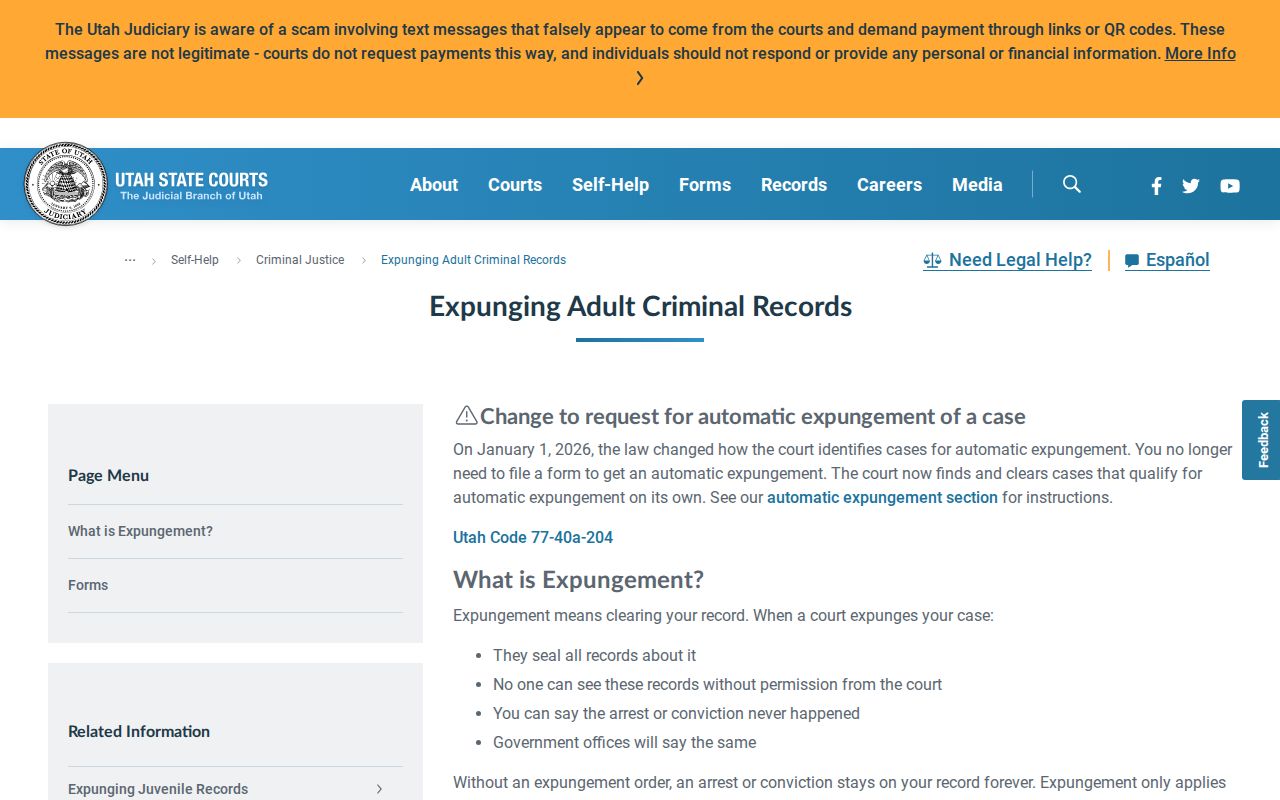
Utah Courts explains the official process for sealing or expunging eligible cases.
Request a Utah Booking Record
When a roster falls short, ask the agency that holds the record. Name the person and the county. Add a likely booking date or range and the item you want. Keep an image request separate. The protected-record exception is never automatic. The sheriff must weigh the photo rules and the signed statement before releasing a booking photo.
- Use the county's official sheriff or jail page to find its records-request instructions. The Utah County Directory routes to the local county site.
- Describe the arrest record, booking number, or date range with enough detail for the custodian to locate an existing file. Ask for an estimate if staff time or copies may cost money.
- If seeking a booking photo, ask whether it is releasable under §§ 63G-2-305(80) and 17-72-802, and follow the required certification process. A denial is not proof that no booking occurred.
- For a state-supervision record, send a narrow GRAMA request through UDC's current records process. Identify the person and UDC number if known.
GRAMA sets no statewide price or turnaround for booking records. Ask the custodian for both. Third-party listings may lag behind current agency instructions.
Utah Mugshot Sealing and Retention
Utah Courts handles expungement two ways. Some cases qualify for automatic clean-slate review, while others need a petition. Since January 1, 2026, the automatic review can take up to 120 days. Eligibility plus waiting periods hinge on the case. A Class A drug-possession conviction currently waits seven years. A Class B misdemeanor waits six. Those waiting figures apply only to certain offenses on the list.
Petitions come with conditions. The case cannot be pending. The person cannot be incarcerated, on probation, or on parole. Fines and restitution must be paid before the petition moves ahead. A certificate of eligibility can take months and stays valid for 180 days. Check current court guidance before relying on any timeline.
A sealing order closes government access and removes the public Xchange entry once processing completes. Utah law gives qualifying publish-for-pay sites a general 30-day removal route capped at $50. A seven-day no-fee route applies when proof shows acquittal, nonprosecution, expungement, vacation, or pardon. Keep the official order and page address when you request a correction.
Retention follows the record and its approved schedule. Some nonpublic records carry 75-year periods. Records created when a person was 21 or younger get 100 years. Local schedules differ. Long retention does not mean the image stays publicly posted. Exceptions apply for each schedule.
Note: A sealed case may disappear from Xchange while a separate publisher page or old search result remains visible.
Find Utah Busted Mugshots and Arrests
Start with the county that likely made the arrest. Utah has no statewide jail roster. A missing result can mean a delay, a transfer, a release, a spelling issue, or a different county altogether. Where no roster exists, ask the sheriff or jail records unit for an existing record under GRAMA.
- Search the county's official current roster or recent-booking report. Note its date range and status label.
- For state supervision, use UDC by name or offender number; for a filed Utah case, check Xchange.
- If the record is absent online, ask the holding agency or court for a specific existing record.
A name match is only a lead. Confirm identity and custody with the agency, then rely on the court's final docket or judgment for the outcome.
Utah County Roster Search Windows
Utah publishes no official statewide jail roster. Counties offer current-custody searches, short booking reports, limited tables, or nothing verified online. Every feed carries its own scope and update note.
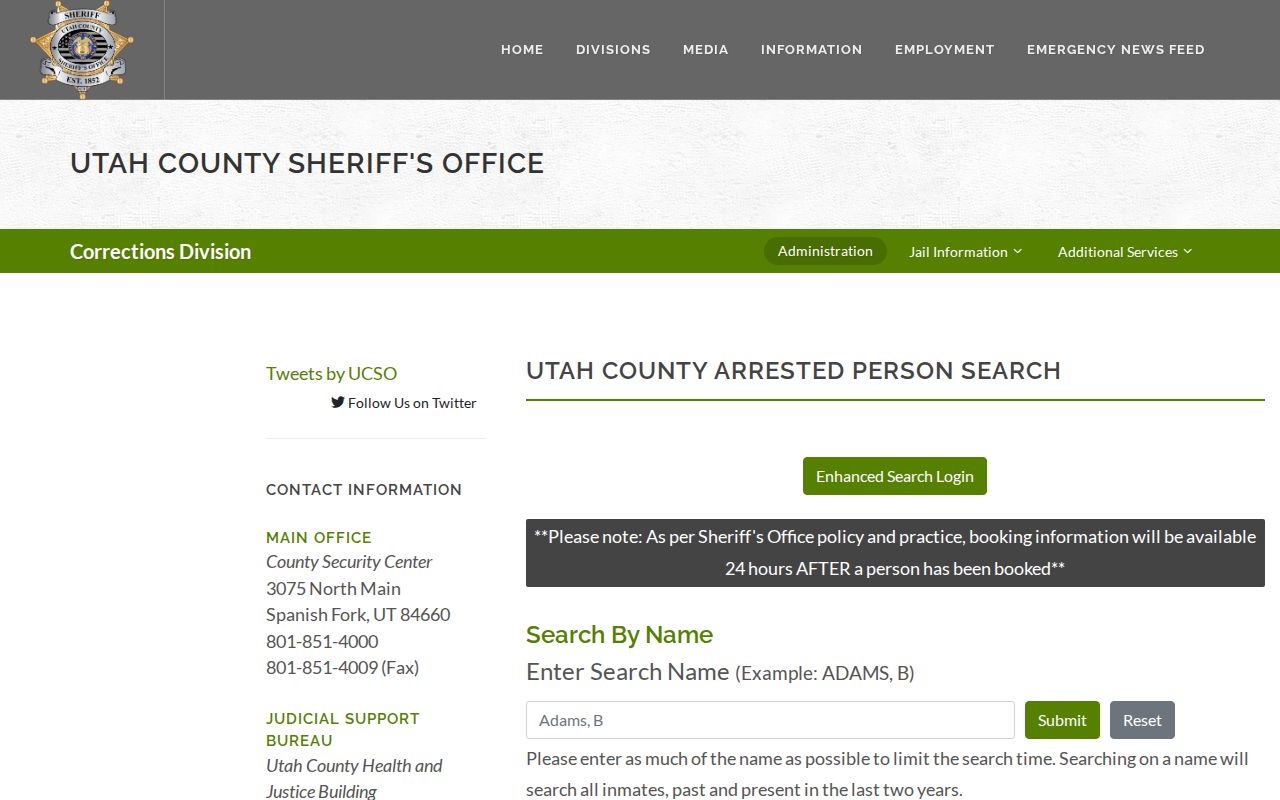
Utah County shows how the windows differ. Its form takes a name, an Arrested Date, and a Current Inmates choice. Enter names surname-first and dates in MM-DD-YYYY form. Booking data appears 24 hours after booking, so the date search is not live.
| Search field or choice | How to use it |
|---|---|
| Name | Enter as much of the name as possible. Utah County's example is “ADAMS, B”; other counties may format names differently. |
| Arrested Date | Utah County uses MM-DD-YYYY and posts data after 24 hours. |
| Current Inmates | This selects a custody view, not a date-based booking list. |
| Booking number and status | Read these on a booking detail when shown; they are not universal search inputs. |
- Pick the likely booking county and open its official search page.
- Enter a name or date in the format requested.
- Check whether the result means current custody, an older booking, or release.
- If no match appears, check another likely county or ask its records unit.
| County route | What the official source reports |
|---|---|
| Beaver | Recent Bookings covers 30 days; public booking photos were removed under H.B. 228. |
| Box Elder | No online roster; the Sheriff's booking inquiry is the official fallback. |
| Cache | Current-inmate and last-30-day products are described, but the reviewed page was unavailable. |
| Carbon | Searchable current table: name, booking number, arrival, and holds. |
| Daggett | No roster; the county jail closed in February 2017. |
| Davis | Current-custody name search with a refresh timestamp; no daily feed found. |
| Utah | Arrest data posts after 24 hours; a legacy photo window is subject to current law. |
| Washington | Five-day bookings, current roster, prior-14-day releases, and felony releases. |
| Wasatch | No county roster; Heber City's End of Shift archive covers incidents, not jail intake. |
| Wayne | No roster; UDC says sentenced inmates go to Sevier County Jail. |
| Weber | Current roster may update hourly or less often; no separate recent feed was found. |
County sheriff apps and social alerts may share public-safety updates. They are not complete booking logs unless the agency says so. Utah County's app listings describe reports, tips, and public-safety updates, not roster or photo search.
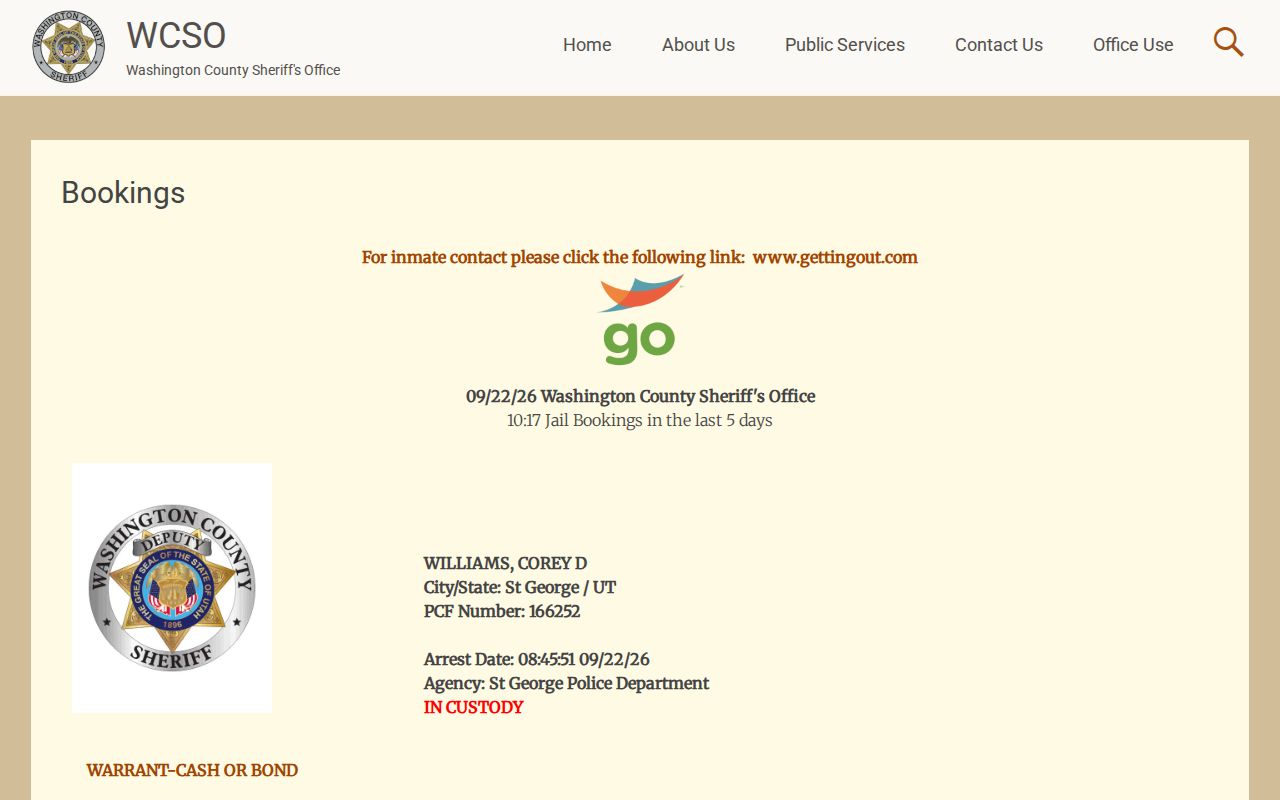
Note: A released person may leave a live roster while the county retains the underlying booking record.
Why Utah Busted Mugshots Go Missing
Utah's photo rule is steadier than its feed windows. Beaver and Cache say images came down after H.B. 228. Davis and Washington show roster data with no public photo. Utah County's older 30-day statement cannot override current GRAMA protections or § 17-72-802. A cached screen, social post, or third-party copy proves nothing about what a sheriff releases today. Ask the custodian whether a specific photo is releasable. A faceless roster entry is not a missing record.
Utah County's official Arrested Person Search shows the county's own search route.
Utah Busted, Released, or Sentenced
One name can surface in different systems at different points. A county intake page is not a court judgment, and a state offender profile is not the original booking record. Pick the record that answers your question. Then confirm it with its custodian.
A new booking first shows up in the holding county's roster or dated report. After release, the live list can drop the name. The record stays with the county. Charges and outcomes live in Utah Courts Xchange. That service is not a photo source, and it excludes sealed, expunged, juvenile delinquency, child-welfare, and termination-of-parental-rights cases. State custody and supervision show up in UDC, which does not promise a photo on every profile. Utah County delays booking data by 24 hours. Washington keeps its five-day report separate from current-inmate and release views. A name missing from one list may sit in another.
UDC's official offender search is for people under current state supervision.
Does a blank roster prove there was no arrest? No. The person may have been released, transferred, booked in a different county, or fall outside that page's date window. Ask the responsible agency to confirm.
Utah Court and Federal Record Search
Xchange holds district and justice court summaries. District court generally covers felonies and Class A matters. Justice court handles Class B, Class C, and infractions. Public district-court documents entered since July 1, 2010 may appear. A new booking can precede a case number. Read the final judgment instead of treating the booking charge as the outcome.
Sealed and expunged cases sit outside the public service, along with juvenile delinquency, child-welfare, and termination-of-parental-rights matters. A blank result can reflect those limits, an unfiled case, or a name variation. Ask the clerk for any document missing from the summary.
The federal Bureau of Prisons locator finds federal inmates incarcerated since 1982. Search by name or register number. It returns custody details, not booking photos. Federal custody is separate from a Utah county arrest.
Note: Use the court file to verify an outcome, and the agency that holds a person to confirm present custody.
Utah Warrants and Custody Alerts
Utah's central warrant tool comes from the Bureau of Criminal Identification. Its Statewide Warrants search covers the whole state. Treat any hit as a lead, though. Shared names and shifting status make a match unreliable on its own. Never confront someone over a listing. For immediate danger, call 911; otherwise contact law enforcement through its official channels.
The Department of Corrections describes warrant work by Adult Probation and Parole. Yet it publishes no searchable absconder list. The U.S. Marshals District of Utah page spans all 29 counties and profiles no fugitives. Keep in mind a warrant can exist without appearing anywhere online.
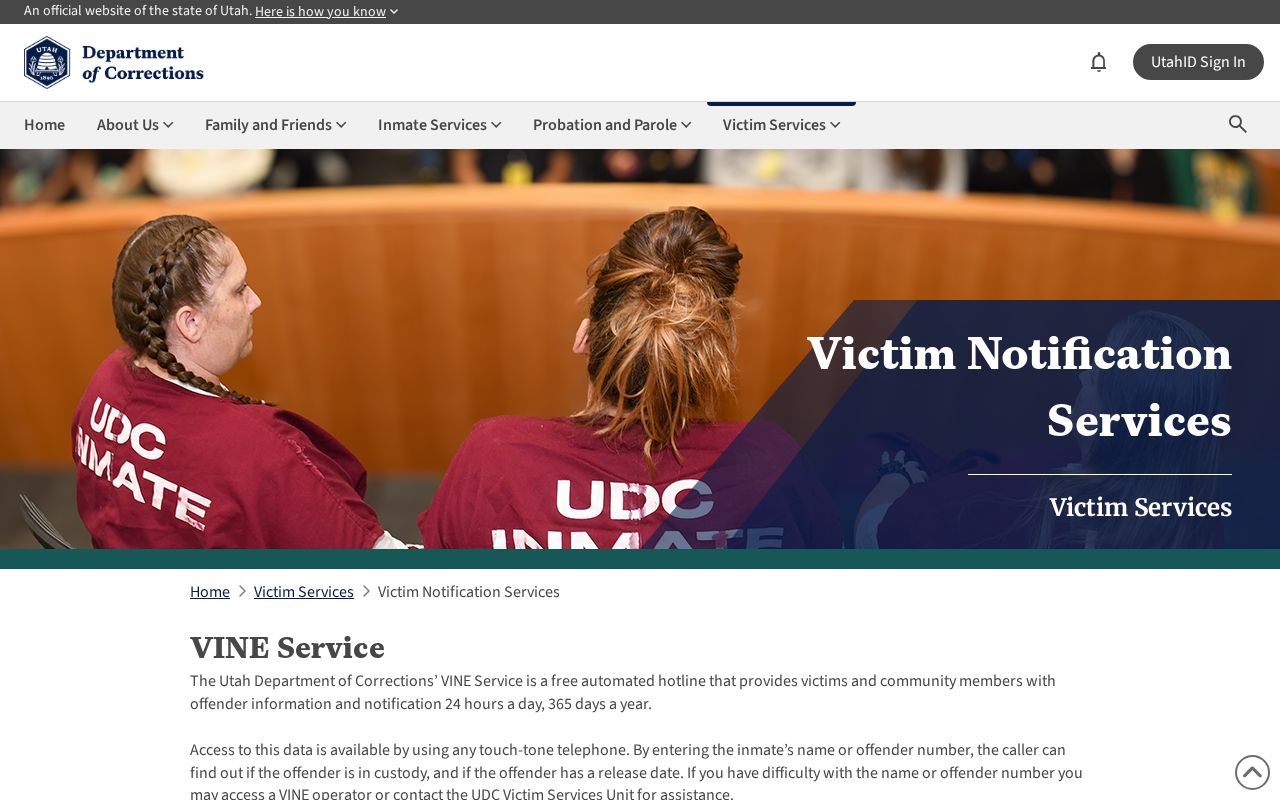
VINE, run by UDC, is a free registration service. It sends alerts for chosen events. Those include release, transfer, escape, return from escape, death, or parole release. It is not a booking roster. County alert apps and sheriff social media posts can help. They are not complete arrest logs either.
UDC describes its free victim notification service and custody-event alerts.
Note: A warrant or wanted-list entry can change. Confirm its status through law enforcement before making decisions.
Where Utah Busted Mugshots Appear
Start any search with official records. News outlets pick which stories to run, courts log the cases filed with them, and independent index sites may republish public material. None of these replaces the county or court that created the record in the first place.
| Source | Photo? | Official? | What it is useful for |
|---|---|---|---|
| County sheriff or jail roster | Often no public booking photo in the reviewed Utah systems | Yes | Current custody or recent bookings, with county-specific fields and windows. |
| UDC offender search | A profile photo is not promised for every result | Yes | People currently under state corrections supervision. |
| Utah Courts Xchange | No booking-photo search | Yes | Filed case summaries and dispositions, subject to access limits. |
| State or federal agency release | May include an authorized image | Yes | Specific public-safety or case information from the issuing agency. |
| Utah newsrooms | Selected stories only; photo source varies | No, editorial source | Context for a reported event, not a complete arrest feed. |
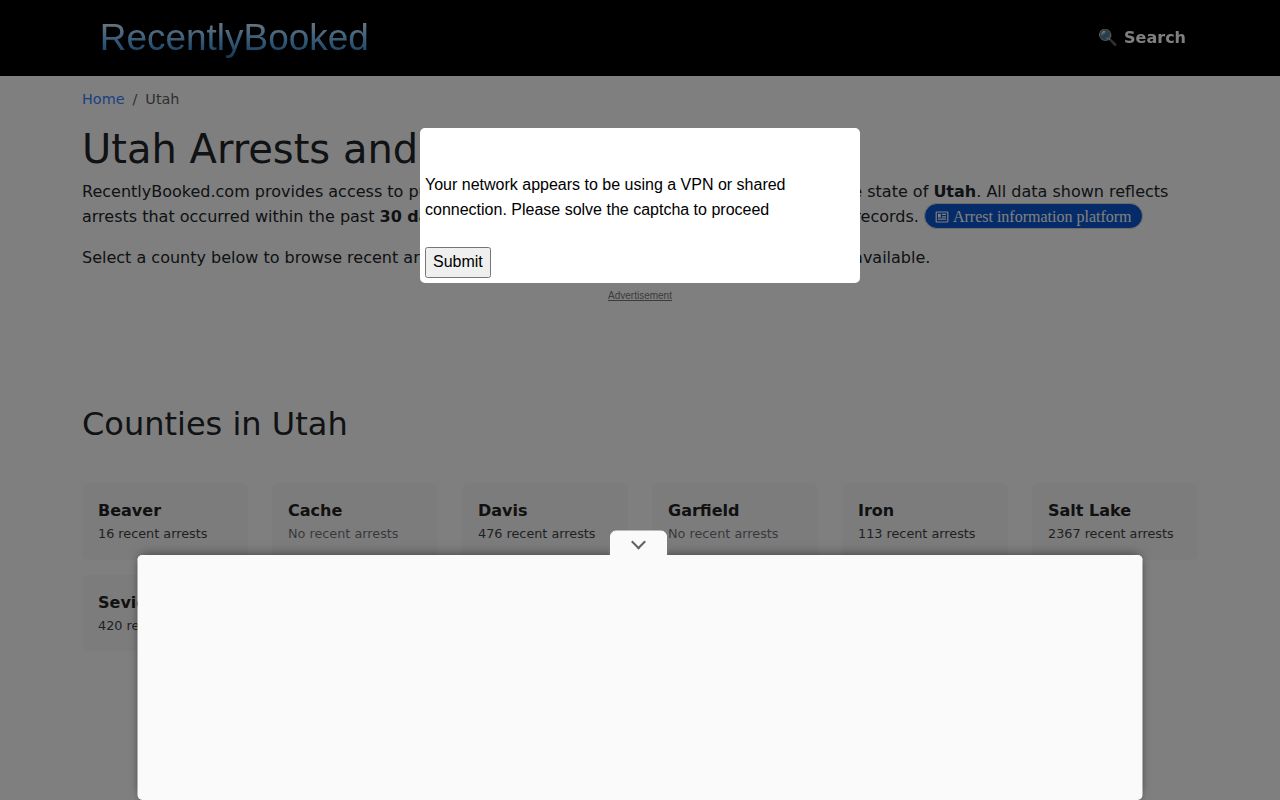
| RecentlyBooked Utah | May display copied booking material | No | Its state page said it used public sources and covered the past 30 days, but listed only a subset of counties when reviewed. |
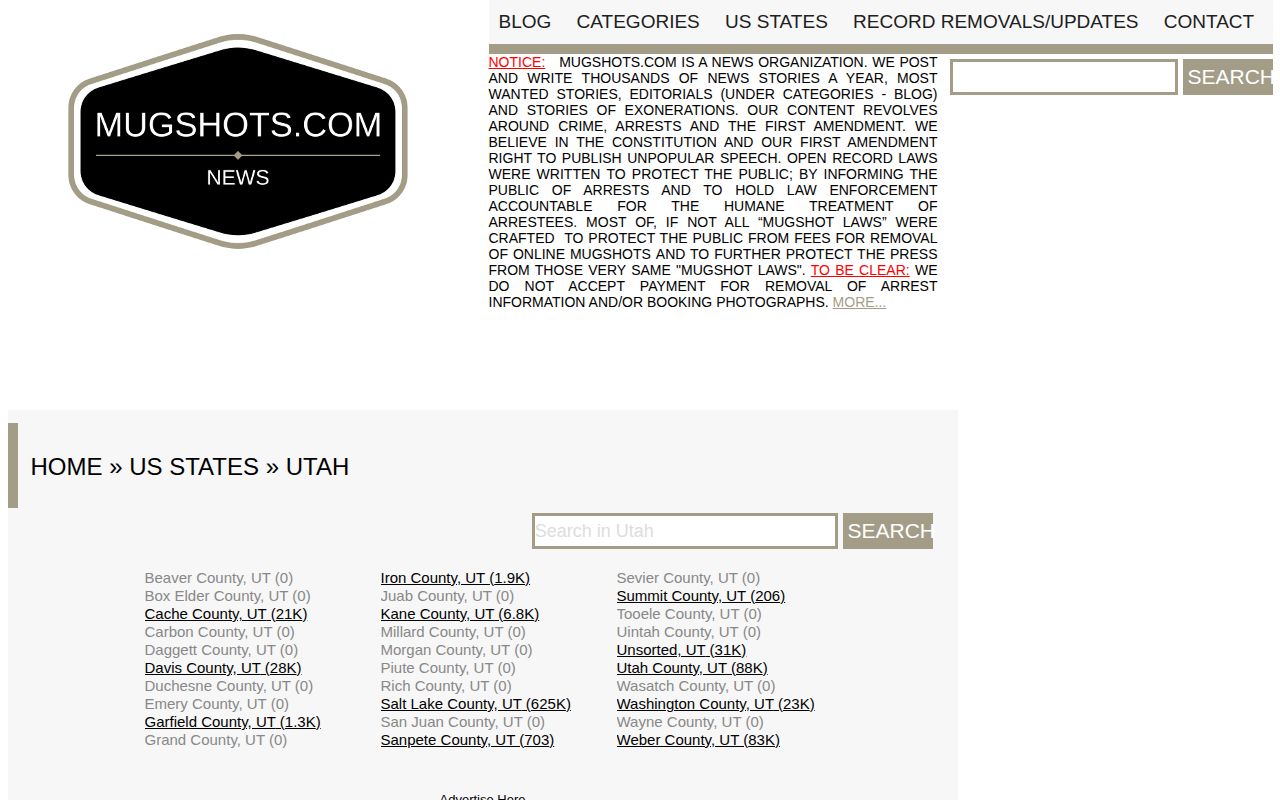
| Mugshots.com and Arrests.org | May show third-party copies | No | Independent indexes; coverage can be incomplete or stale. |
Utah newsrooms cover arrests selectively. KSL, FOX 13, KUTV, ABC4, Gephardt Daily, St. George News, Standard-Examiner, Deseret News, and The Salt Lake Tribune choose stories rather than running full booking feeds. Photos vary by source too. Confirm any reported charge through the court record.
Independent indexes are another avenue. The list includes RecentlyBooked, Mugshots.com, Arrests.org, Busted Newspaper, and Mugshots.zone. RecentlyBooked's Utah page covers a 30-day slice of counties, not all 29. Arrests.org's Utah route exists but makes no completeness claim, and Busted Newspaper's state browser has no verified Utah landing page. Mugshots.zone lacks a complete state page. All are unofficial leads, so coverage may be partial or stale. Verify with the responsible county or court.
RecentlyBooked's Utah landing page is a third-party index, not an official statewide roster.
Removal routes differ by publisher and shift over time. RecentlyBooked and Mugshots.com describe no-cost processes, and Busted Newspaper's form states no fee. Arrests.org offers a record-specific form without a fee-free guarantee. Mugshots.zone has no confirmed Utah-specific free route. Follow the publisher's current instructions with official proof. Never pay a removal intermediary. A publisher edit never changes the government record or the case outcome.
Mugshots.com's Utah directory is an independent archive with no official completeness status.
Mugshots.zone describes its database as assembled from multiple sources.
Utah Busted Mugshots by County
Each Utah county keeps its own records its own way. Someone arrested by city police may still be booked into a county jail. The hold could even sit in a facility outside the arresting city. So search the county tied to the arrest. Confirm the actual booking agency before going further. The state directory lists all 29 county destinations in alphabetical order. Each county site then opens into its local roster, booking reports, and records instructions.
The county sites are far from identical. Larger ones like Davis, Utah, Washington, and Weber offer more searchable or multi-report interfaces. Several rural counties rely on a shorter table. Others use a phone path, or no roster at all. That gap reflects online publishing choices, not arrest volume. City police may hold the incident report while the county holds the jail intake record. So both routes can matter.
For a specific municipality, use the county site for jail custody. Ask the city police department about its incident record. Then check Xchange for the court stage. Not every city runs a booking list. A county's current roster may drop a released person's entry.
Note: The county that books a person may differ from the city where an arrest began.
Where Old Utah Mugshots Go
Current rosters serve short-term needs. Older material may stay with a sheriff. Records face destruction after their retention period, or they pass to the Utah State Archives. The Archives' prison registers reach back to the 1870s. Photos accompanied inmate files by 1889. Series 10398 holds state-prison identification photos from 1940 to 1954. Series 10396 covers identification photographs from roughly 1890 to 1925. It picks up again from 1950 to 1968. These are historical collections, not live arrest searches.
For a historical search, browse the Archives' digital prison inmate records and series descriptions. The Ogden Jail Books span arrests and prisoners from 1902 to 1941. Entries may include a prisoner number, mug shot, physical description, and jail log. Records under 100 years old carry privacy redactions for minors. Each scan shows what the record said at the time.
Pricing and turnaround are not fixed. Identify the collection or series, the person's name, a likely date, and an item reference. Then ask the Reference Team about access, format, fee, and timing. The Old Mugshot Archives page links to the collections and the request path.